Environmental Testing & Assessments in Brevard County, FL
You do not have a mold problem, a water problem or a smoke problem until someone proves it — and you cannot fix what has not been defined. An environmental assessment turns a suspicion into a document: what is present, where it came from, how far it has travelled, and what has to happen next.
Hanes Environmental has spent 18 years doing this work across Brevard County and Central Florida. Every assessment is performed by a Florida-licensed assessor, every sample goes to an accredited laboratory, and every report is written so that a contractor can bid from it, an adjuster can process it and an owner can understand it.
When an Assessment Is the Right First Step
- A musty smell with no visible source
- Visible growth after a roof, plumbing or AC leak
- Post-storm intrusion where the water path is unclear
- Symptoms — congestion, headaches, irritation — that improve when occupants leave the building
- Before buying, after a remediation, or before a lease dispute goes further
- After a fire, when the question is how far the smoke actually went
- A tenant or employee complaint that needs an independent finding
- A well, a taste change, or discolored tap water
What We Test and Assess
Mold
Mold Assessments · Mold Testing · Mold Remediation Protocols · Post-Remediation Verification / Clearance Testing.
Air
Indoor Air Quality Testing · VOC Testing · HVAC / Duct Contamination Assessments
Water
Water Damage Assessments · Moisture Mapping · Thermal Imaging · Water Quality Testing
Fire
Fire & Smoke Damage Assessments · Soot / Carbonaceous Particle Testing
Biological
Sewage / Bacteria Testing · Legionella Testing
Commercial
Commercial Environmental Testing
How an Assessment Runs
- Intake. What happened, when, what has been done already, who else is involved. This determines whether testing is even warranted — sometimes the answer is a moisture reading and a repair, not a lab bill.
- Visual inspection. Every accessible area, and the ones people skip: behind appliances, under sinks, air handler closets, wall cavities at floor level, crawl spaces, attic penetrations, window and door returns.
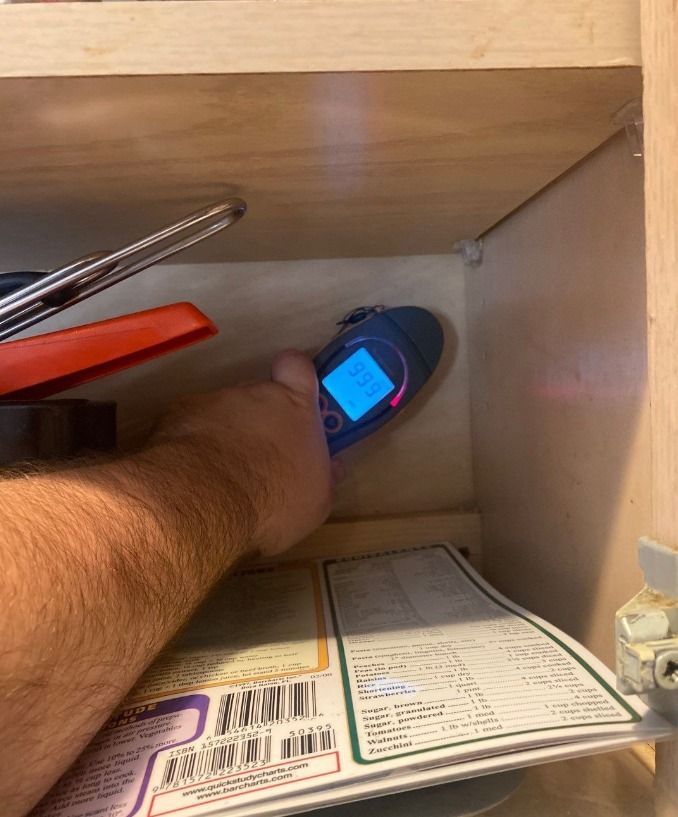
- Instrumentation. Moisture meters, thermal imaging and hygrometers locate wet material and hidden intrusion paths before anyone opens a wall.
- Sampling, only where it answers a question. Air and surface samples from affected areas plus an outdoor or unaffected control for comparison. Sampling without a control tells you almost nothing, which is why so many cheap "mold tests" are useless.
- Accredited laboratory analysis. Using published analytical methods.
- Report. Findings, photographs, lab data, moisture documentation, the probable moisture source, and a scope of work specific enough to act on.
Avoid the Damage Pains and Call Hanes.
What Makes a Hanes Report Different
It names the source. Spore counts without a moisture source is a lab bill, not an answer. Mold is a symptom.
It is defensible. Licensed assessor, accredited lab, named standards, photographic record. It holds up with adjusters, in real estate transactions and where attorneys are involved.
It is independent. We are not bidding on the removal, so the scope is not written to sell you anything.
It is readable. Our clients say this more than anything else: the report makes sense.
Frequently Asked Questions
What is the difference between a mold assessment and a mold test?
The assessment is the whole engagement — inspection, moisture diagnosis, findings, scope. The test is one tool inside it: samples sent to a lab. A test with no assessment gives you numbers with no meaning.
Can a mold test come back normal when there is mold in the house?
Yes, and it happens often. Spores are not released evenly, a contained cavity may not be communicating with room air yet, and one air sample is a single moment in time. That is why we lead with visual inspection and moisture data rather than sampling alone.
Do I need testing after remediation?
If the remediation was significant, yes — post-remediation verification is what proves the work met the protocol. It has to be done by someone who did not perform the remediation, which is exactly the position we are in.