Common Mistakes When Documenting Sewage Contamination
The quality of the report depends on the quality of the inspection. You want someone who understands moisture behavior, building materials, contamination categories, and the difference between visible damage and actual spread. The report should be direct, specific, and supported by field findings, not vague language.
It also helps to work with a company that can explain results in plain English. Technical accuracy matters, but so does communication. When people are dealing with damage to a home, rental, office, or investment property, they need answers they can act on.
In Florida and Kentucky, where weather, humidity, plumbing failures, and hidden moisture issues can all play a role, a thorough assessment is one of the smartest early steps you can take. Hanes Environmental provides that kind of clear, field-based reporting so property owners know what they are dealing with before the damage gets worse.
The sooner you replace assumptions with documented facts, the easier it becomes to protect the building, the people inside it, and the money it will take to set things right.
Why Interpretation Matters More Than the Lab Report Alone
If the property recently had a leak, flood, or AC overflow, timing matters. Testing too early can miss developing growth, while waiting too long can allow contamination to spread. In many cases, the first priority after water damage is drying and stabilizing the structure quickly. Once materials remain wet beyond a day or two, the risk of mold increases significantly.
After water damage, testing usually focuses on the affected materials, adjacent rooms, and HVAC impact if the system ran during the event. Moisture mapping is essential here. Water often travels farther than the visible stain suggests, especially under flooring and inside wall cavities.
If remediation has already been performed, post-remediation verification testing may be the next step. That type of testing checks whether contamination has been properly removed and whether the area is dry and ready for rebuild. For property owners, buyers, managers, and contractors, that documentation can be just as important as the initial diagnosis.
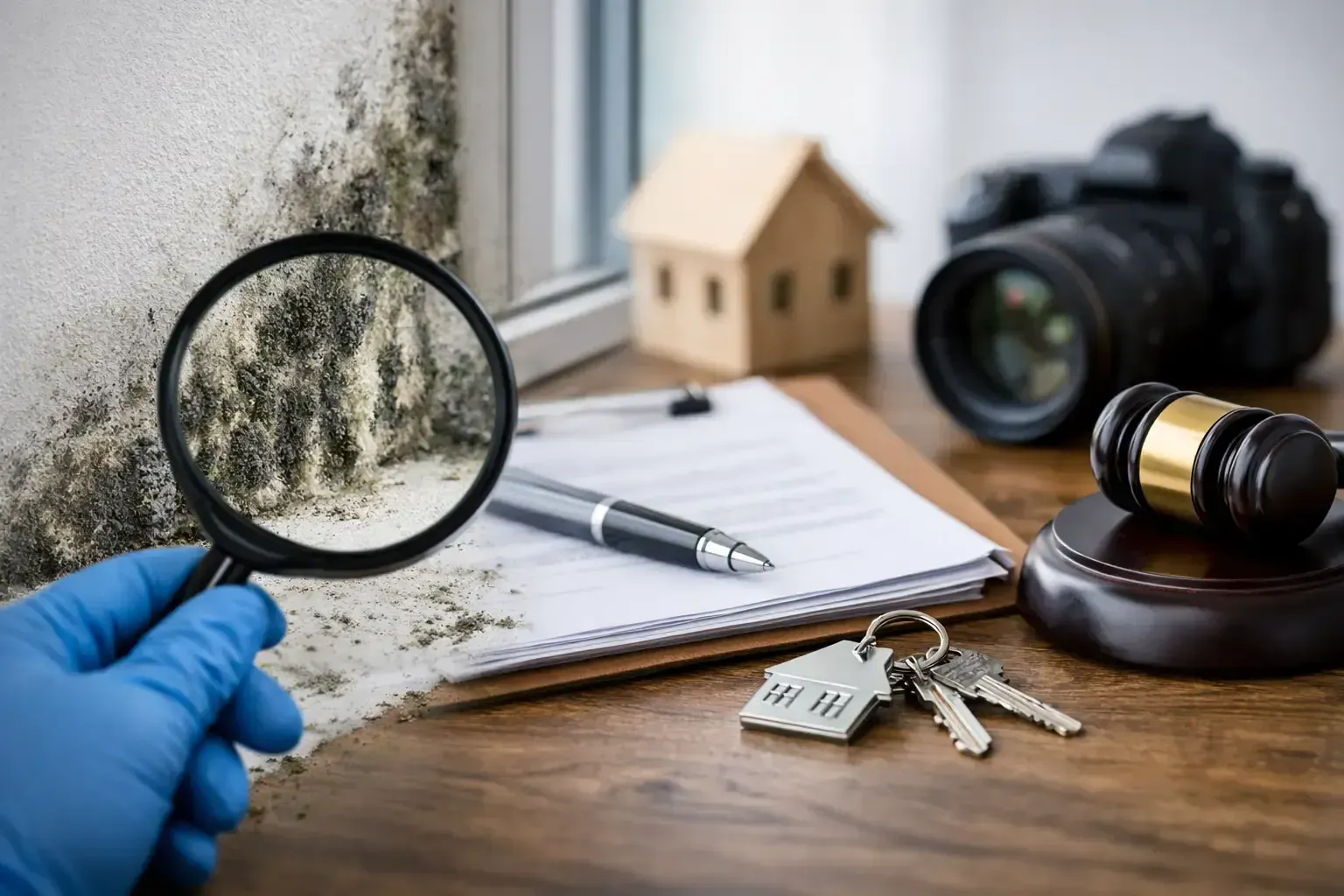
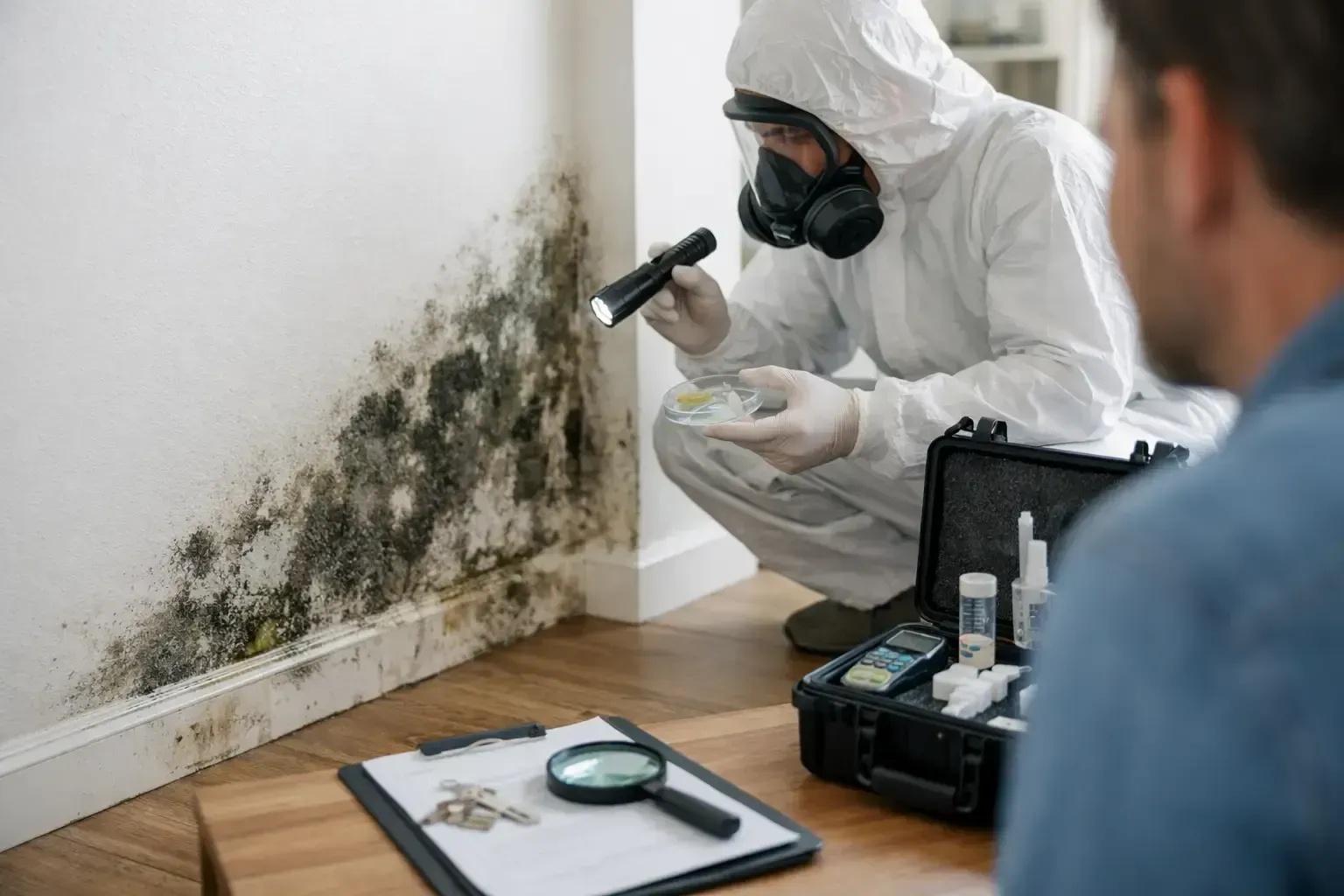
Use the checklist as a screening tool, not a final diagnosis. Walk the property slowly. Start where water is most likely, then expand outward to adjacent rooms and connected systems such as HVAC and crawl spaces. Document what you see, what you smell, and what history you know.
If your inspection reveals isolated humidity staining, you may only need better ventilation and moisture control. If it reveals recurring leaks, soft materials, spreading discoloration, or widespread odor, the safer move is a professional mold assessment with testing where appropriate.
When indoor conditions feel off, delay usually makes the situation more expensive. A careful inspection done early can protect your health, your property, and your documentation if the issue turns into a real estate, insurance, or tenant matter.
The best closing thought is simple: trust what the building is telling you. If you see moisture, smell mustiness, or notice damage that does not make sense, act on it before a small problem becomes hidden contamination.
Room-by-room Inspection Points
Bring in Qualified Help for Complex or Contaminated Losses
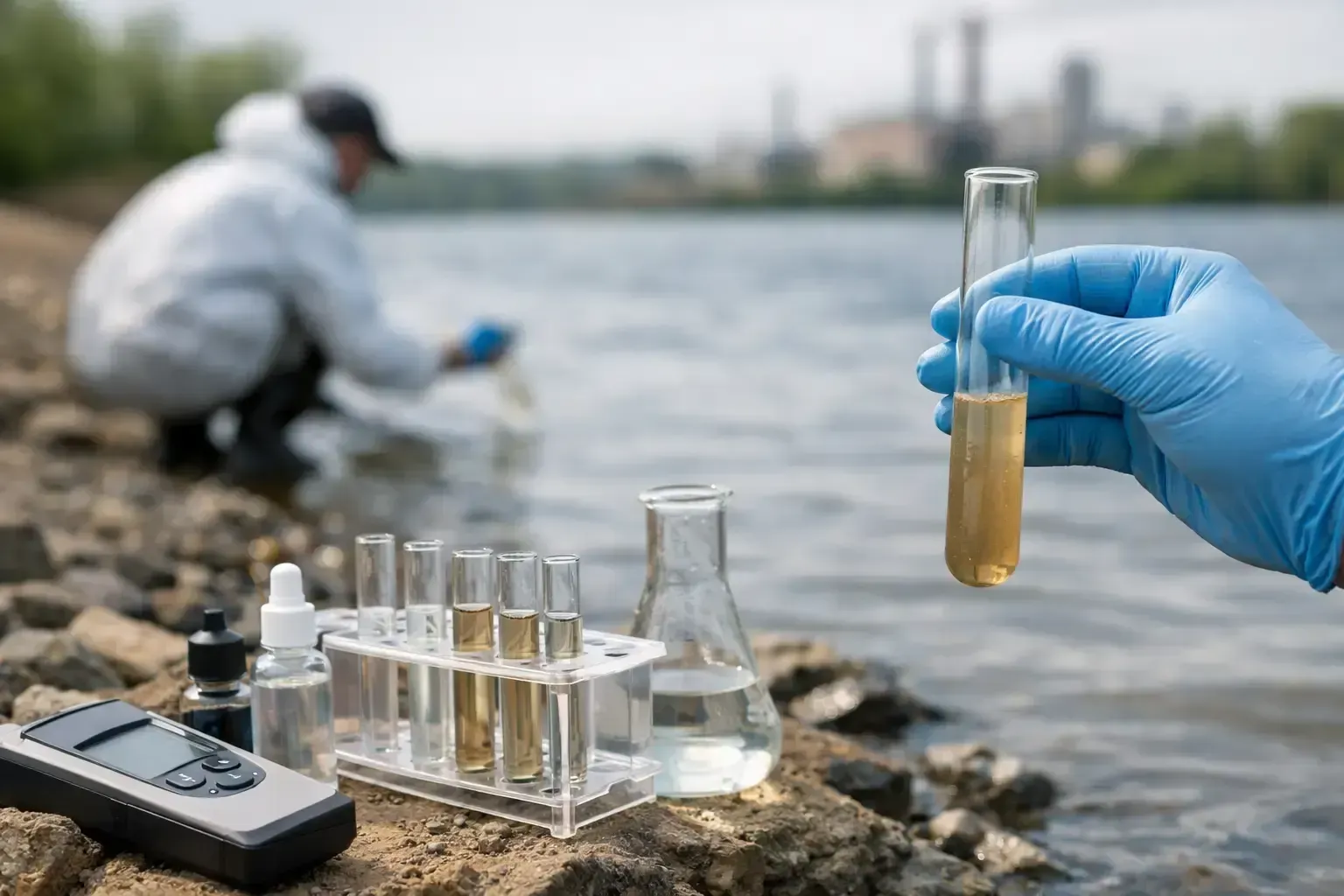
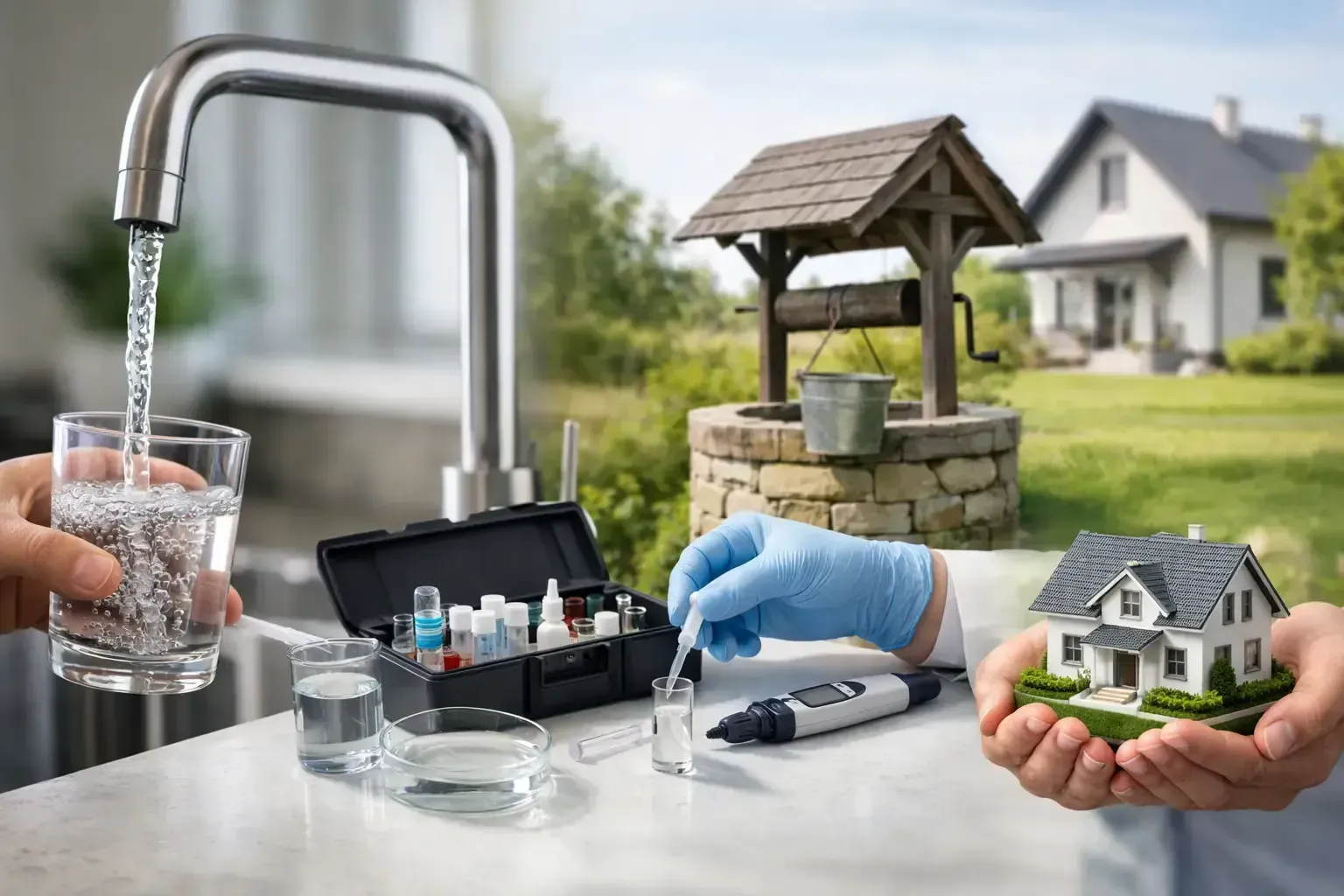
A glass of water can look clear, smell normal, and still carry contamination that affects a property’s occupants, plumbing, or sale. This guide to contaminated water screening explains how to respond when you have a concern, what testing can identify, and why the right sample matters as much as the laboratory result.
Water concerns usually begin with a specific event: a private well has not been tested, a sewage backup reaches finished space, floodwater enters a building, or an FHA or VA loan requires documented water quality. The goal is not to guess based on appearance. The goal is to collect defensible information and make decisions from clear results.
When Contaminated Water Screening Is Needed
Some water issues demand immediate attention. Sewage overflows, toilet backups involving waste, and water from broken drain lines may contain bacteria and other pathogens. If this water contacts flooring, drywall, contents, or HVAC components, the concern extends beyond the water source. Affected materials may need assessment, containment, cleaning, removal, and restoration.
Other concerns are less obvious. A well may be vulnerable after heavy rain, flooding, nearby construction, a change in taste or odor, or damage to the well cap. Older plumbing can contribute metals. Properties on municipal water can also have localized issues caused by building plumbing, stagnant lines, or cross-connections.
Screening is also appropriate before purchasing a home with a private well, when a lender requires FHA or VA water testing, after a long vacancy, or when tenants report persistent water-quality concerns. For landlords, property managers, and business owners, documented testing can help establish what was present at the time of the investigation and support a timely corrective response.
Do Not Rely on Sight, Smell, or Home Strips Alone
Discoloration, cloudiness, sulfur-like odors, staining, or an unusual taste are useful clues, but they do not identify a contaminant or measure its concentration. Clear water can contain bacteria, nitrates, lead, or other contaminants. Conversely, colored water may be caused by sediment or mineral content that requires attention but does not automatically indicate a health hazard.
Consumer test strips can be useful for a quick screening of a limited condition, such as pH or hardness. They are not a substitute for properly collected, laboratory-supported testing when health, lending, insurance, liability, or property transactions are involved. The result is only as reliable as the method, sample container, preservation, handling, and laboratory analysis behind it.
Start With the Water Source and the Event
A proper investigation begins with questions. Is the property served by a private well, municipal supply, cistern, or another source? Did a flood, sewage loss, plumbing break, or recent repair occur? Is the concern limited to one faucet, one building area, or the entire property?
This context guides the testing plan. Testing a kitchen tap after water has sat in plumbing overnight can answer a different question than testing a flushed tap or sampling directly from a well. A sample collected from a bathroom faucet may not represent water at a kitchen fixture. If contamination is suspected following a sewage event, water testing may be only one part of the assessment. Building materials and affected contents need to be evaluated as well.
For private wells, an inspector should also consider visible site conditions. A damaged cap, poor grading, standing water near the casing, or nearby septic concerns can point to a possible pathway for contamination. The laboratory result identifies what was found, while the site assessment helps explain why it may be present and what should be corrected.
What Water Screening May Test For
The appropriate panel depends on the property and reason for testing. There is no single test that covers every concern. A basic bacterial test may be central for a well or lender requirement, while a broader analysis may be needed after a known contamination event or where local conditions warrant it.
Common screening targets include:
- Total coliform and E. coli bacteria, which can indicate possible contamination pathways and, in the case of E. coli, fecal contamination concerns.
- Nitrates and nitrites, which may be important near agricultural activity, septic systems, or areas affected by runoff.
- Lead, copper, and other metals, especially when plumbing age, corrosion, or fixture-specific exposure is a concern.
- pH, turbidity, hardness, iron, manganese, and similar indicators that can affect plumbing, treatment choices, appearance, and taste.
- Volatile organic compounds or other targeted contaminants when there is a known source, industrial history, fuel concern, chemical spill, or unusual odor.
Not every property needs every test. Broad testing without a reason can add cost while creating results that are difficult to interpret. Narrow testing can miss the condition you are trying to investigate. A qualified environmental professional can match the scope to the water source, the building history, the event, and the purpose of the report.
How Accurate Water Sampling Works
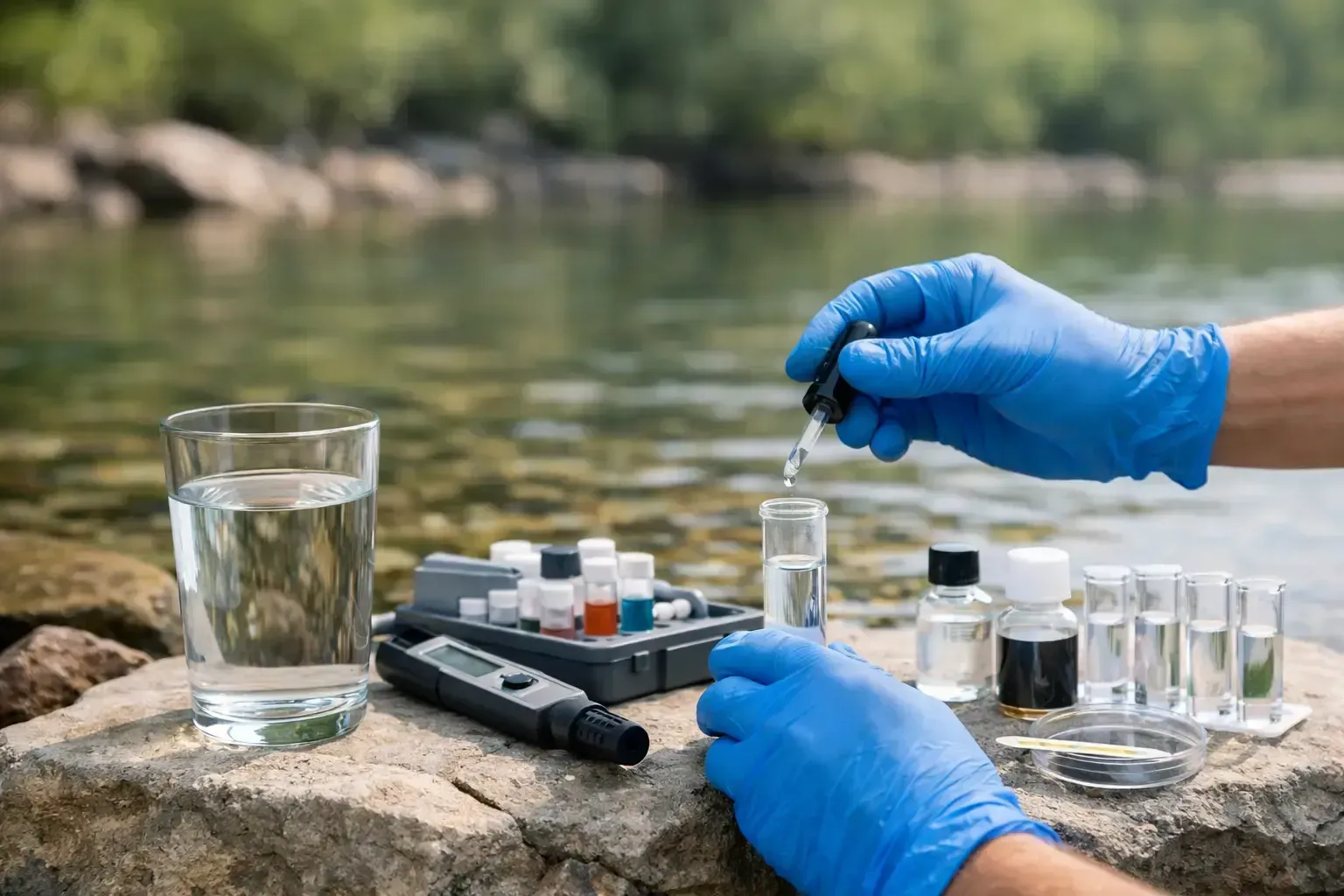
Accurate sampling follows a defined procedure. The sample point must be selected intentionally. Aerators may need to be removed, the fixture may need to be disinfected, and water may need to run for a specified period before collection. For certain metals testing, the instructions can be different because the goal may be to measure water that has remained in contact with plumbing.
Bacteria samples are especially time-sensitive. The container is sterile and may contain a preservative. Touching the inside of the cap or bottle, using the wrong faucet, filling it incorrectly, or delaying delivery can compromise the sample. Laboratory holding times matter. A valid sample must be collected, stored, and transported according to the required method.
This is why a result should never be separated from the sampling record. A clear report should identify the sample location, date, time, test requested, laboratory findings, and any relevant observations. That documentation is valuable for homeowners, buyers, sellers, property managers, insurers, and contractors who need a reliable record of conditions.
What to Do if Sewage or Floodwater Is Involved
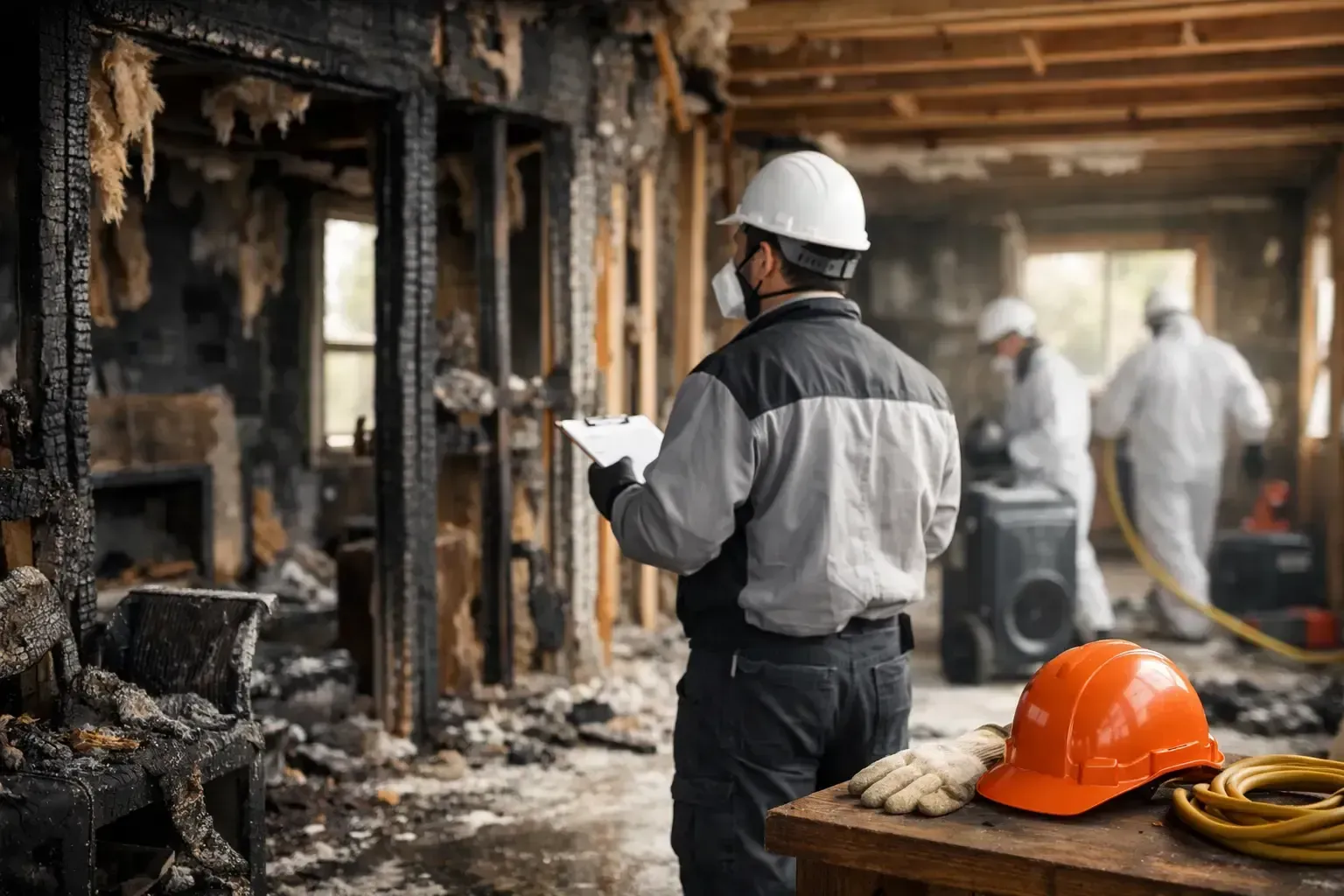
Treat sewage-contaminated water as an urgent property condition. Keep occupants and pets out of the affected area. Do not use household fans to spread air across contaminated materials, and do not assume that mopping alone resolves the problem. Porous materials such as carpet padding, insulation, particleboard, and drywall can retain contamination depending on the extent and duration of exposure.
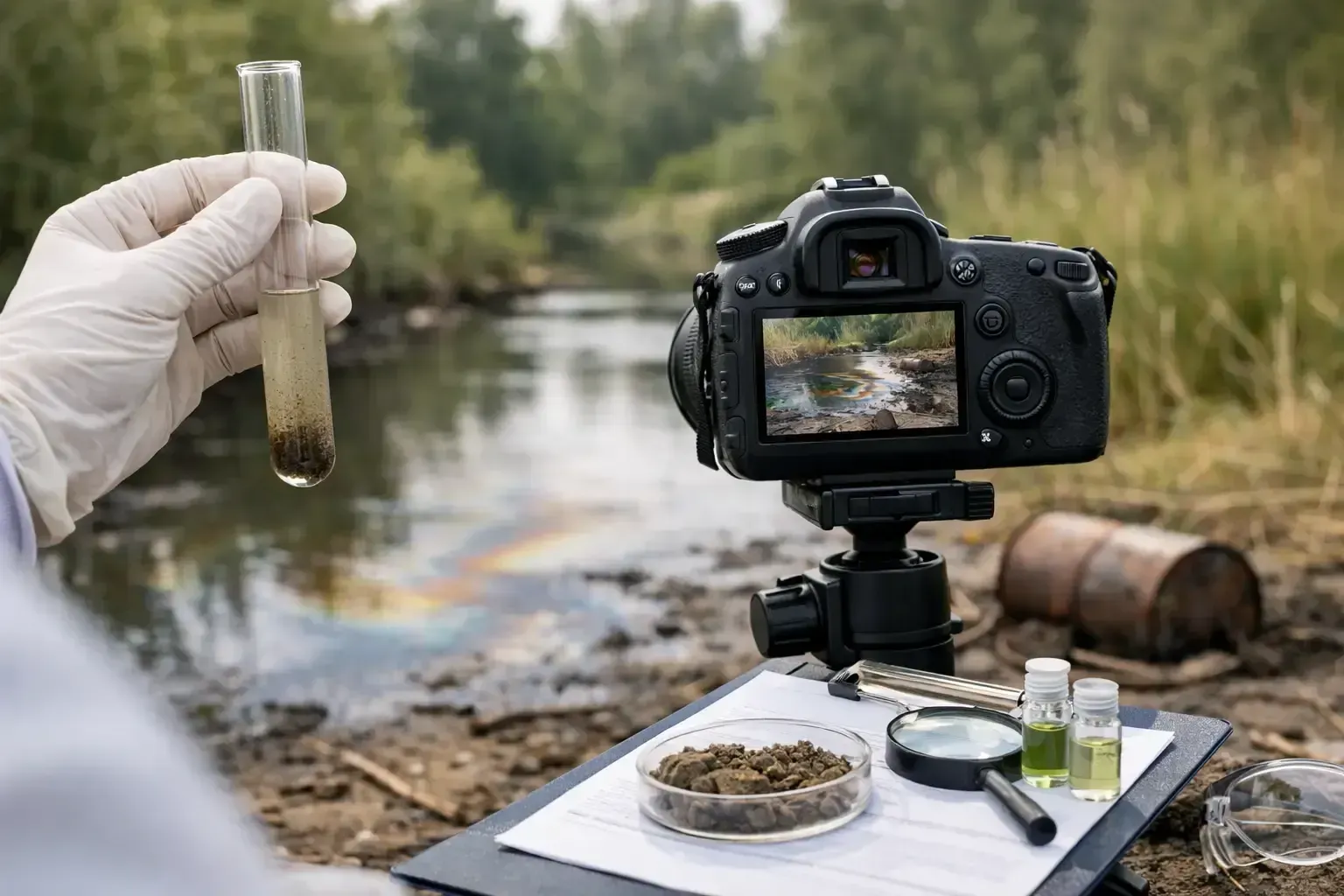
Shut off the source if it is safe to do so, then document the affected areas with photographs before major cleanup begins. A professional water damage and environmental assessment can determine the extent of impact, identify moisture migration, and help establish an appropriate restoration scope. If the loss involves a claim or a tenant-landlord dispute, early documentation is particularly important.
Floodwater deserves the same caution. Water entering from outdoors may carry soil, sewage, chemicals, and microbial contamination. The source category, duration of exposure, material type, and extent of spread all affect the appropriate response.
Understanding Results and Choosing the Next Step
A detected contaminant does not automatically mean the entire building is unsafe, and a non-detect result does not erase a separate moisture, sewage, or plumbing issue. Results must be interpreted in context. A bacterial detection in a private well may call for a review of the well system, potential disinfection, corrective repairs, and follow-up sampling. A fixture-specific metals result may require plumbing evaluation rather than treatment for the whole property.
When results exceed an applicable standard or reveal a contamination concern, the next step should be targeted. It may involve repairing a well cap, correcting drainage, servicing plumbing, replacing affected materials, disinfecting a system, installing appropriate treatment, or completing restoration after a sewage loss. Retesting is often necessary to confirm that corrective work addressed the original condition.
Avoid selecting treatment equipment before you know what needs treatment. A filter designed for sediment is not necessarily appropriate for bacteria, metals, or chemical contaminants. Likewise, a one-time disinfecting step may not solve an ongoing pathway that allows contamination to return.
A Clear Record Protects the Property
For real estate transactions, lender requirements, insurance matters, and commercial properties, the written report can be as important as the test itself. It should clearly state what was sampled, what method was used, what the laboratory found, and what the findings mean in practical terms. Vague language creates uncertainty. Specific documentation supports better decisions.
Hanes Environmental provides water testing and contamination investigations for properties across Florida and in Lexington and Louisville, Kentucky, with a focus on clear reporting and practical next steps. Whether the concern is a well, a lender-required test, a suspected sewage exposure, or water damage affecting a building, the right investigation begins with a properly defined question.
If water has changed, a well has gone untested, or contaminated water may have reached your property, act before assumptions turn into larger repairs or avoidable exposure. Accurate screening gives you a documented starting point and a clearer path forward.
Recent Posts