Common Mistakes When Documenting Sewage Contamination
The quality of the report depends on the quality of the inspection. You want someone who understands moisture behavior, building materials, contamination categories, and the difference between visible damage and actual spread. The report should be direct, specific, and supported by field findings, not vague language.
It also helps to work with a company that can explain results in plain English. Technical accuracy matters, but so does communication. When people are dealing with damage to a home, rental, office, or investment property, they need answers they can act on.
In Florida and Kentucky, where weather, humidity, plumbing failures, and hidden moisture issues can all play a role, a thorough assessment is one of the smartest early steps you can take. Hanes Environmental provides that kind of clear, field-based reporting so property owners know what they are dealing with before the damage gets worse.
The sooner you replace assumptions with documented facts, the easier it becomes to protect the building, the people inside it, and the money it will take to set things right.
Why Interpretation Matters More Than the Lab Report Alone
If the property recently had a leak, flood, or AC overflow, timing matters. Testing too early can miss developing growth, while waiting too long can allow contamination to spread. In many cases, the first priority after water damage is drying and stabilizing the structure quickly. Once materials remain wet beyond a day or two, the risk of mold increases significantly.
After water damage, testing usually focuses on the affected materials, adjacent rooms, and HVAC impact if the system ran during the event. Moisture mapping is essential here. Water often travels farther than the visible stain suggests, especially under flooring and inside wall cavities.
If remediation has already been performed, post-remediation verification testing may be the next step. That type of testing checks whether contamination has been properly removed and whether the area is dry and ready for rebuild. For property owners, buyers, managers, and contractors, that documentation can be just as important as the initial diagnosis.
Use the checklist as a screening tool, not a final diagnosis. Walk the property slowly. Start where water is most likely, then expand outward to adjacent rooms and connected systems such as HVAC and crawl spaces. Document what you see, what you smell, and what history you know.
If your inspection reveals isolated humidity staining, you may only need better ventilation and moisture control. If it reveals recurring leaks, soft materials, spreading discoloration, or widespread odor, the safer move is a professional mold assessment with testing where appropriate.
When indoor conditions feel off, delay usually makes the situation more expensive. A careful inspection done early can protect your health, your property, and your documentation if the issue turns into a real estate, insurance, or tenant matter.
The best closing thought is simple: trust what the building is telling you. If you see moisture, smell mustiness, or notice damage that does not make sense, act on it before a small problem becomes hidden contamination.
Room-by-room Inspection Points

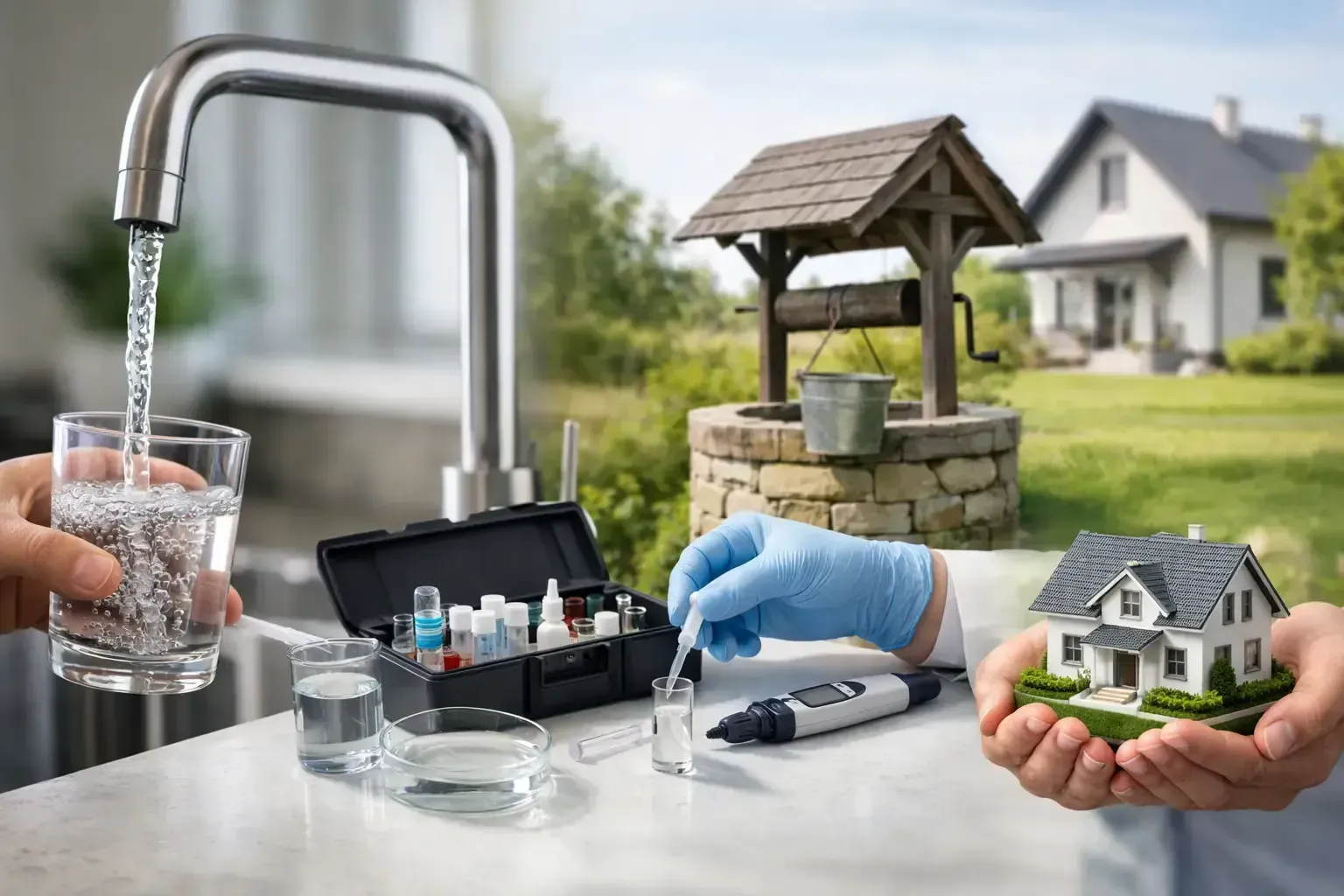
A water report can look reassuring until one unfamiliar number raises a difficult question: Is this water actually safe to use? This water test interpretation guide explains what common drinking-water results mean, what they do not prove, and when a result calls for prompt action. Whether the property uses a private well, a municipal supply, or a shared system, the right response depends on the contaminant, the concentration, the people exposed, and how the sample was collected.
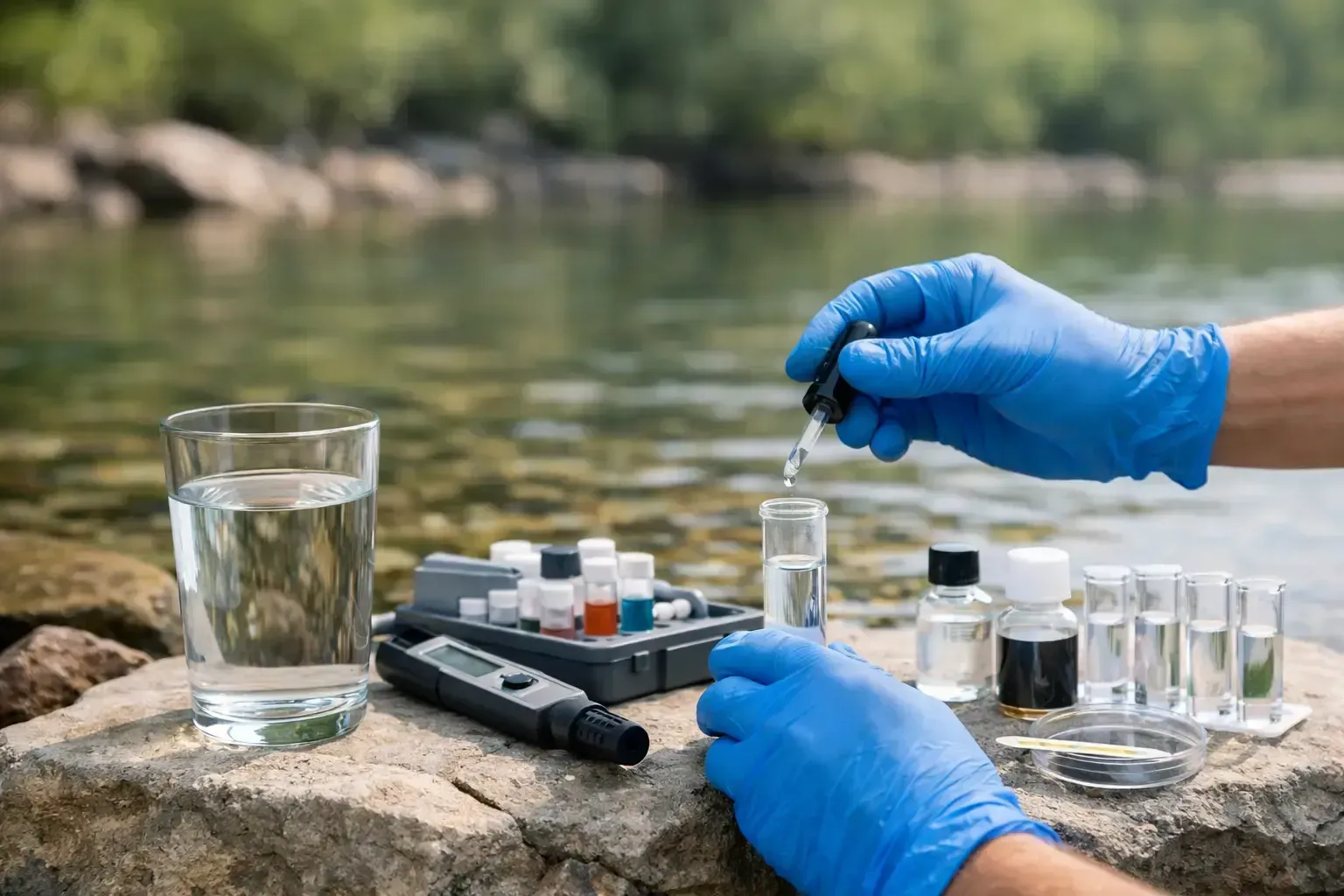
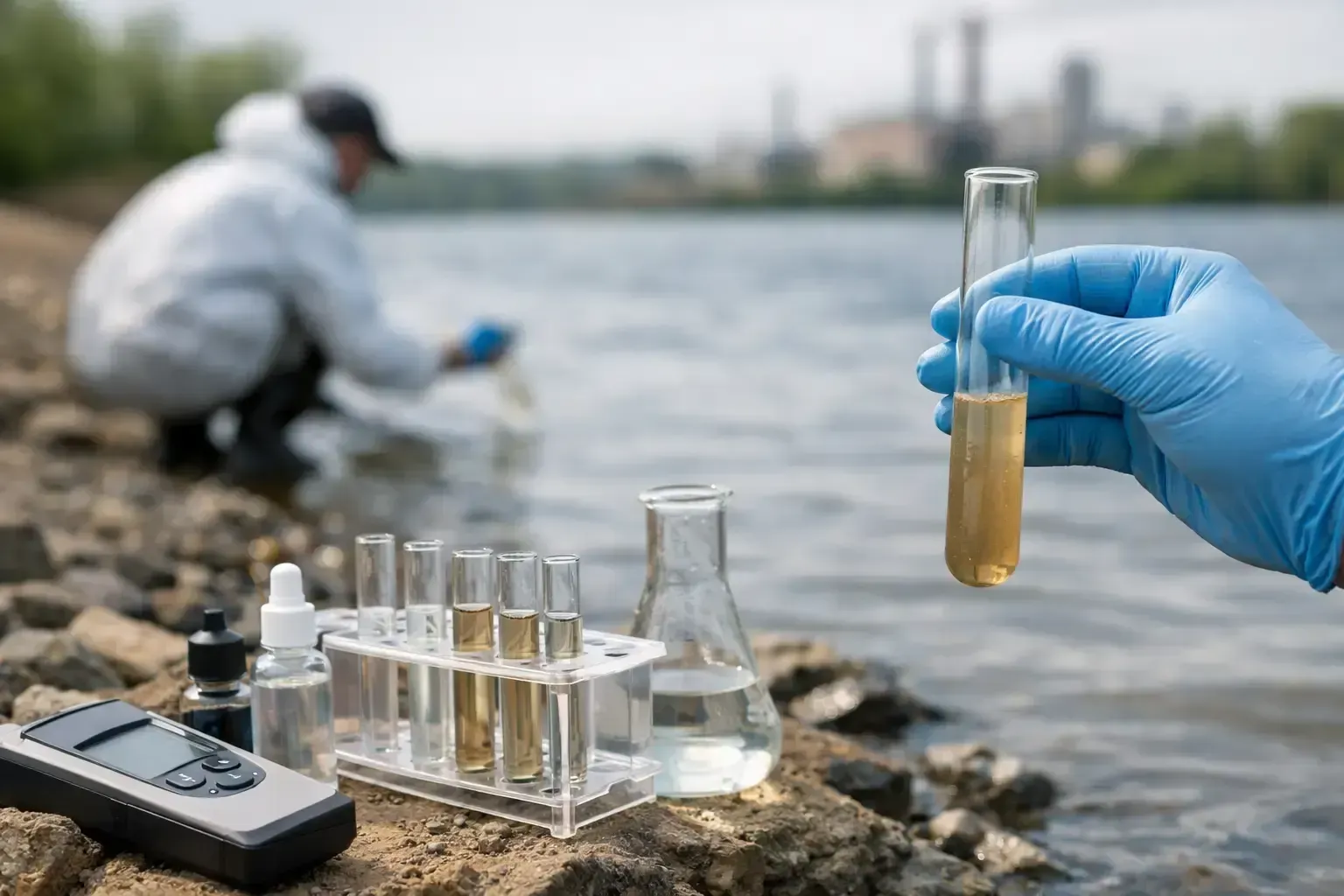
Water testing is not simply a pass-or-fail exercise. A laboratory report is evidence from one sample collected at one point in time. It can identify a contamination concern, support a real estate requirement, document a water-damage or sewage event, or establish a useful baseline. It must also be read in context.
Start With the Type of Water Test
Before focusing on a number, confirm what was tested. FHA and VA water testing commonly focuses on bacteriological safety and selected chemical parameters for properties served by private wells. A broader assessment may include metals, nitrate, nitrite, volatile organic compounds, sulfur-related concerns, or contaminants associated with a specific local condition or property history.
A report only answers the questions the laboratory method was designed to answer. A bacteria panel does not rule out lead. A metals panel does not prove a well is free of microorganisms. If a building has experienced sewage backup, flooding, fire suppression water, chemical storage, or a long vacancy, the testing scope may need to be expanded beyond a standard potable-water panel.
Also identify the sample source. Water drawn from a kitchen faucet may reflect the well or municipal supply, but it may also reflect interior plumbing, a treatment system, a refrigerator filter, or a fixture that has sat unused. A sample taken before treatment and one taken after treatment can answer very different questions.
Water Test Interpretation Guide: Read the Report in Order
Begin with the laboratory result, its units, and the comparison value listed on the report. Concentrations may appear as milligrams per liter, micrograms per liter, parts per million, or parts per billion. These units are not interchangeable. A result that appears numerically small can still be meaningful when it is measured in parts per billion.
Next, look for qualifiers. “Not detected” means the laboratory did not detect the analyte above the method’s reporting limit. It does not necessarily mean the substance is completely absent. “Estimated” may indicate the result is near the method’s detection capability. A result marked as outside a holding time, affected by sample condition, or requiring a repeat sample should not be treated as final proof of safety or contamination.
The comparison number matters as well. Some values are enforceable drinking-water standards for public water systems. Others are health advisories, treatment guidelines, or secondary standards related to taste, odor, staining, and plumbing impacts. A result above a secondary standard may not create an immediate health emergency, but it can still damage fixtures, corrode plumbing, reduce water quality, and signal a condition worth investigating.
Do Not Ignore Sample Collection Details
Poor sampling can create misleading results. Bacteria sampling requires sterile technique and proper handling. Sampling from a faucet with an aerator, a contaminated hose connection, or an improperly disinfected outlet can produce a positive result that may not represent the source water. Conversely, sampling after a filter or water softener can hide a source-water concern.
For lead and certain other metals, the sampling protocol is especially important. First-draw samples after water has remained in plumbing can help evaluate potential fixture or pipe contribution. Flushed samples may better reflect water entering the building. The report should be interpreted alongside the collection method, not separately from it.
What Common Water Results Can Mean
Total Coliform and E. coli
Total coliform bacteria are indicators. Their presence does not automatically mean sewage is present, but it can indicate a pathway for contamination, such as a compromised well cap, surface runoff, damaged plumbing, poor disinfection, or an improperly maintained treatment component.
E. coli is more urgent. It is associated with fecal contamination and should be treated as a potential health concern. Do not assume a single shock-chlorination treatment has solved the problem without follow-up testing. The cause matters. A well may need inspection for casing damage, drainage problems, nearby contamination sources, or deficiencies in the cap and seal.
People with weakened immune systems, infants, older adults, and anyone with gastrointestinal symptoms may face greater risk from contaminated water. When bacteria results are positive, avoid casual assumptions about drinking, cooking, brushing teeth, making ice, or preparing infant formula until qualified guidance and corrective steps are in place.
Nitrate and Nitrite
Nitrate and nitrite can enter groundwater through fertilizer use, septic systems, animal waste, and other sources. These results deserve careful attention in homes served by private wells, particularly in rural or developing areas. Elevated concentrations can be especially dangerous for infants because they can interfere with the blood’s ability to carry oxygen.
Boiling is not a reliable fix for nitrate. It can concentrate the contaminant as water evaporates. The appropriate response may involve identifying the source, improving well protection, using properly selected treatment, or obtaining an alternate water supply while the issue is addressed.
Lead, Copper, and Other Metals
Lead is often a plumbing issue rather than a source-water issue. It may come from older service lines, solder, brass components, or fixtures. Even when a result is low, the property’s plumbing age, water chemistry, and sampling conditions affect how the result should be understood. A single sample may not represent every tap in a building.
Copper can also originate from plumbing, especially where water is corrosive. Iron and manganese are often associated with staining, metallic taste, sediment, and treatment concerns. They may not present the same type of health concern as bacteria or lead at typical nuisance levels, but they can affect water usability and indicate that a well or treatment system needs attention.
pH, Hardness, and Total Dissolved Solids
pH describes whether water is acidic or alkaline. It is not a contamination test by itself, but it helps explain corrosion, scaling, metallic taste, and how well certain treatment methods may perform. Low pH can contribute to plumbing corrosion and metal release. High pH can contribute to mineral scale.
Hardness reflects dissolved calcium and magnesium. Hard water can leave scale on fixtures, reduce soap performance, and shorten the service life of water-using appliances. Total dissolved solids, often called TDS, measures a broad mix of dissolved minerals and salts. A higher TDS result does not identify the specific substance causing it, so it should not be used alone to diagnose a health concern.
When a Result Requires Action
A concerning result should lead to a proportionate response. Positive E. coli, elevated nitrate or nitrite, significant lead findings, or evidence of sewage-related contamination should be addressed without delay. The immediate protective step may be avoiding water use for consumption, providing alternate water, or following local health guidance while the source is investigated.
Other results may allow time for planned correction. Hardness, iron, manganese, odor, staining, and moderate pH concerns often call for source evaluation and treatment planning rather than emergency restrictions. The trade-off is that installing treatment before understanding the underlying issue can waste money and leave a contamination pathway uncorrected.
Retesting is often essential after repairs, disinfection, or treatment changes. A clear follow-up result provides better documentation than a verbal assurance that the problem was fixed. For property transactions, tenant concerns, insurance matters, and commercial facilities, defensible sampling records and laboratory-supported reporting can be particularly valuable.
Public Water and Private Wells Need Different Questions
Municipal water systems are monitored under public-water rules, but the water can still be affected after it enters a building. Aging plumbing, cross-connections, stagnant lines, damaged fixtures, and building-specific storage can change water quality at the point of use.
Private well owners carry more direct responsibility for monitoring and maintenance. Wells should be evaluated after flooding, nearby construction, septic failures, changes in taste or odor, visible sediment, recurring illness concerns, or a known contamination event. Routine testing can also catch changes before they become a more disruptive property problem.
For homeowners, buyers, landlords, and property managers across Florida and Kentucky, Hanes Environmental can help define an appropriate testing scope, collect samples correctly, and explain laboratory findings in plain language. Clear results help you decide whether a well needs repair, a treatment system needs adjustment, or the building requires a broader environmental investigation.
When water results create uncertainty, protect the people using the property first. Get the sample method, contaminant type, and exposure risk reviewed together, then act on documented findings rather than guesswork.
Recent Posts