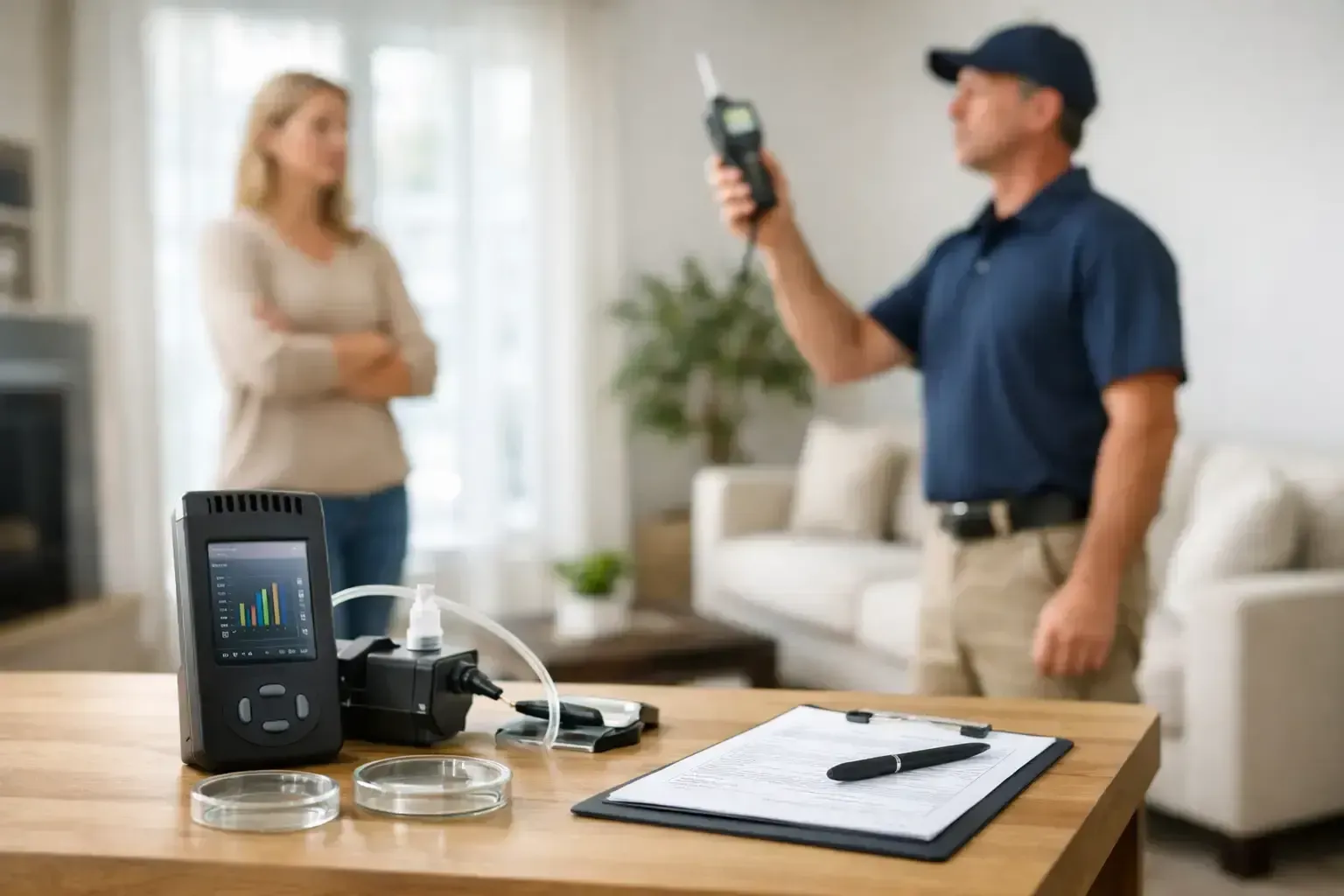
A musty room, recurring headaches, or complaints from tenants can turn into a bigger problem fast. When people start asking about indoor air quality testing cost, they usually are not shopping out of curiosity. They want a clear answer about whether the air inside a home, office, or rental property is safe and what it will take to document the issue properly.
The short answer is that cost depends on what needs to be tested, how large the property is, and whether there is a known event behind the concern, such as water damage, fire residue, sewage exposure, renovation dust, or suspected mold growth. A basic air quality screening may cost far less than a targeted investigation that includes moisture mapping, multiple air samples, surface sampling, and laboratory analysis. That difference matters because the cheapest test is not always the one that gives you a useful answer.
What Affects Indoor Air Quality Testing Cost?
Indoor air quality testing is not one fixed service. It is a category of testing that can include mold spore sampling, VOC testing, combustion byproduct concerns, soot or smoke residue analysis, humidity and moisture investigation, and bacteria-related concerns after contaminated water events. The more specific the concern, the more accurate the scope can be. The more unknowns involved, the more investigation is usually required.
Property size is one of the biggest cost drivers. A small condo with one complaint area will usually require fewer samples and less inspection time than a multi-story home, warehouse, school, or office suite. Accessibility also matters. If the likely source is in a crawlspace, attic, HVAC system, or behind finish materials, the inspection takes more time and may call for additional documentation.
The number of samples also changes pricing. One indoor air sample and one outdoor control sample is a very different project from testing several indoor zones to compare living areas, bedrooms, hallways, and mechanical spaces. In many cases, one sample is not enough to tell a complete story. A defensible report often depends on testing the right areas, not just testing the cheapest area.
Lab work is another factor. Some contaminants require standard analysis, while others call for more specialized laboratory methods. Turnaround time can also affect cost. If a landlord dispute, real estate deadline, insurance issue, or active occupant health concern requires fast answers, expedited analysis may be worth the added expense.
Typical Indoor Air Quality Testing Cost Ranges
For many residential cases, indoor air quality testing cost often falls somewhere in the few-hundred-dollar range for limited testing and climbs higher as the scope expands. A focused mold air sampling visit in a smaller property may be priced very differently from a broader indoor environmental assessment involving several samples, moisture investigation, VOC concerns, and a detailed written report.
In practical terms, smaller and more straightforward jobs may start around a few hundred dollars. More complete residential investigations often land in the mid-hundreds to over a thousand dollars, depending on the number of samples and the suspected source. Commercial properties can run higher because they typically involve larger square footage, more occupied zones, and more reporting needs.
That may sound broad, but broad pricing is more honest than promising one flat number for every situation. A property with visible microbial growth after a leak is different from a property where occupants report odors but there is no obvious source. One may need targeted mold testing. The other may require a wider indoor air quality approach to rule out multiple causes.
What Should Be Included in the Price?
The real question is not just cost. It is value. A low quote can become expensive if it produces vague results that do not help you make a decision.
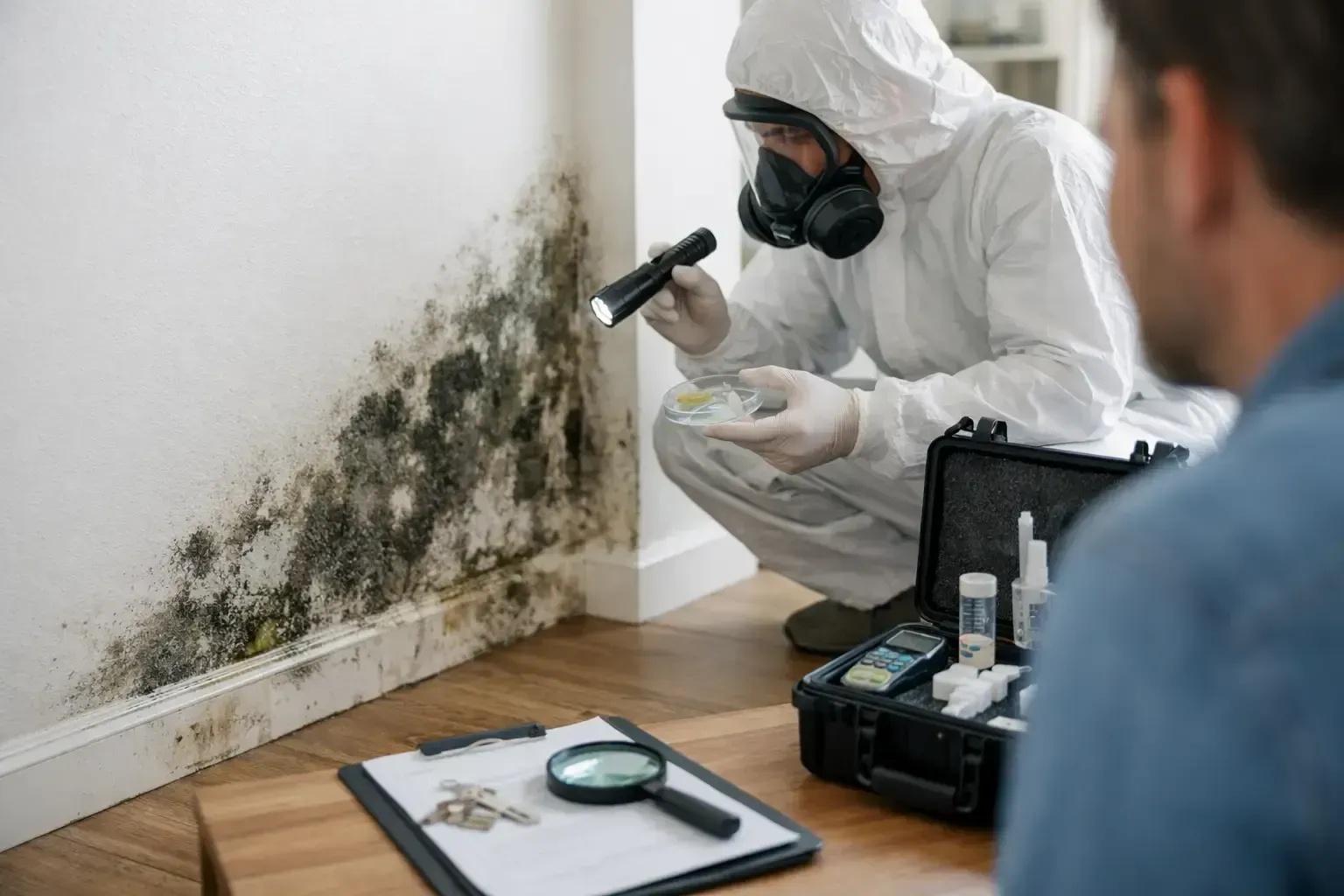
A professional indoor air quality assessment should usually include a visual inspection, an interview about the problem history, identification of likely source conditions, sample collection when appropriate, laboratory analysis, and a written report that explains the findings in plain language. In many situations, moisture readings, humidity evaluation, and HVAC observations are also important because air quality issues often start with building conditions, not just airborne particles.
Clear reporting matters. If you are a homeowner, you need to know whether the issue appears isolated or widespread and what next steps make sense. If you are a property manager, realtor, or business owner, the report may also need to stand up to tenant questions, transaction requirements, or insurance documentation. That level of detail has real value.
When Cheaper Testing is Not Enough
There are situations where bargain testing causes more confusion than clarity. One example is when a company offers a single sample without inspecting for water intrusion, HVAC issues, or hidden mold conditions. Another is when testing is done without a meaningful outdoor comparison or without enough samples to reflect the actual building layout.
Indoor air quality problems are rarely solved by guessing. If occupants are reacting in one part of the building but not another, zone-specific testing may be necessary. If there was a recent fire, sampling may need to focus on soot and carbonaceous particles rather than mold. If a building has chemical odors after renovations, VOC testing may be more useful than standard microbial sampling.
This is where experience matters. The goal is not to sell the largest testing package. The goal is to identify the right scope the first time.
Is Indoor Air Quality Testing Worth the Cost?
Often, yes, especially when the alternative is making expensive decisions without evidence. Replacing materials, cleaning ductwork, relocating tenants, or starting remediation without accurate testing can waste far more money than a proper assessment.
Testing is especially worth it when there are unresolved health complaints, visible signs of moisture, odor issues that keep returning, a recent water or fire event, pending real estate transactions, or disagreement between parties about whether a problem exists. In those cases, documented findings help move the situation forward. They can confirm a concern, narrow the source, or rule out a suspected issue.
There are also times when testing may not be the first step. If a pipe burst yesterday and there is active water damage, emergency drying and moisture control may come before full air testing. If sewage contamination is obvious, immediate safety measures and contamination response are more urgent than broad screening. Good guidance should tell you when testing is needed and when another service should happen first.
How to Compare Estimates Without Missing What Matters
If you are getting quotes, ask what problem the testing is designed to answer. That single question cuts through a lot of confusion. A strong estimate should explain the type of sampling, how many areas will be tested, what the lab analysis covers, and what kind of report you will receive.
It also helps to ask whether the inspection includes moisture evaluation, whether outdoor control samples are used when appropriate, and whether results are interpreted in the context of building conditions. Numbers by themselves are not enough. Interpretation is what makes testing actionable.
For buyers, sellers, landlords, and business owners, defensibility matters too. If findings may be used in a transaction, claim, or dispute, the work should be performed with professional methods and documented carefully. That is not the place to cut corners.
Residential vs. Commercial Testing Costs
Homes and apartments tend to have simpler layouts, fewer occupied zones, and fewer reporting layers. That usually keeps costs more manageable. Even so, older homes, recent leaks, crawlspaces, or HVAC concerns can add complexity quickly.
Commercial and industrial properties often involve more variables. You may need after-hours access, multiple sample locations, tenant coordination, or testing tied to employee complaints. Documentation may also need to be more detailed. That naturally raises the cost, but it also increases the importance of getting a complete and accurate assessment.
For clients in Florida and Kentucky, climate plays a role as well. High humidity, storm-related water intrusion, and fast mold amplification are common concerns in Florida. In both humid and seasonally closed-up buildings, indoor air quality issues can build quietly until odors, staining, or occupant symptoms force attention.
The better way to think about indoor air quality testing cost
Indoor air quality testing cost is best viewed as the price of getting reliable answers, not just the price of collecting samples. If the testing identifies the actual source, helps you avoid unnecessary repairs, and gives you a clear report to act on, it protects both health and property. If it is too limited to answer the real question, even a low number can be money wasted.
An experienced company will explain the scope, tell you where trade-offs exist, and avoid pretending that every building problem fits into one package. That direct approach is how Hanes Environmental handles environmental testing - with a focus on accuracy, practical answers, and documentation that helps you make the next decision with confidence.
If something in your property feels off, trust that instinct and get the right information before the problem grows. Good testing does more than measure air. It gives you a clear path forward.
Recent Posts