Common Mistakes When Documenting Sewage Contamination
The quality of the report depends on the quality of the inspection. You want someone who understands moisture behavior, building materials, contamination categories, and the difference between visible damage and actual spread. The report should be direct, specific, and supported by field findings, not vague language.
It also helps to work with a company that can explain results in plain English. Technical accuracy matters, but so does communication. When people are dealing with damage to a home, rental, office, or investment property, they need answers they can act on.
In Florida and Kentucky, where weather, humidity, plumbing failures, and hidden moisture issues can all play a role, a thorough assessment is one of the smartest early steps you can take. Hanes Environmental provides that kind of clear, field-based reporting so property owners know what they are dealing with before the damage gets worse.
The sooner you replace assumptions with documented facts, the easier it becomes to protect the building, the people inside it, and the money it will take to set things right.
Why Interpretation Matters More Than the Lab Report Alone
If the property recently had a leak, flood, or AC overflow, timing matters. Testing too early can miss developing growth, while waiting too long can allow contamination to spread. In many cases, the first priority after water damage is drying and stabilizing the structure quickly. Once materials remain wet beyond a day or two, the risk of mold increases significantly.
After water damage, testing usually focuses on the affected materials, adjacent rooms, and HVAC impact if the system ran during the event. Moisture mapping is essential here. Water often travels farther than the visible stain suggests, especially under flooring and inside wall cavities.
If remediation has already been performed, post-remediation verification testing may be the next step. That type of testing checks whether contamination has been properly removed and whether the area is dry and ready for rebuild. For property owners, buyers, managers, and contractors, that documentation can be just as important as the initial diagnosis.
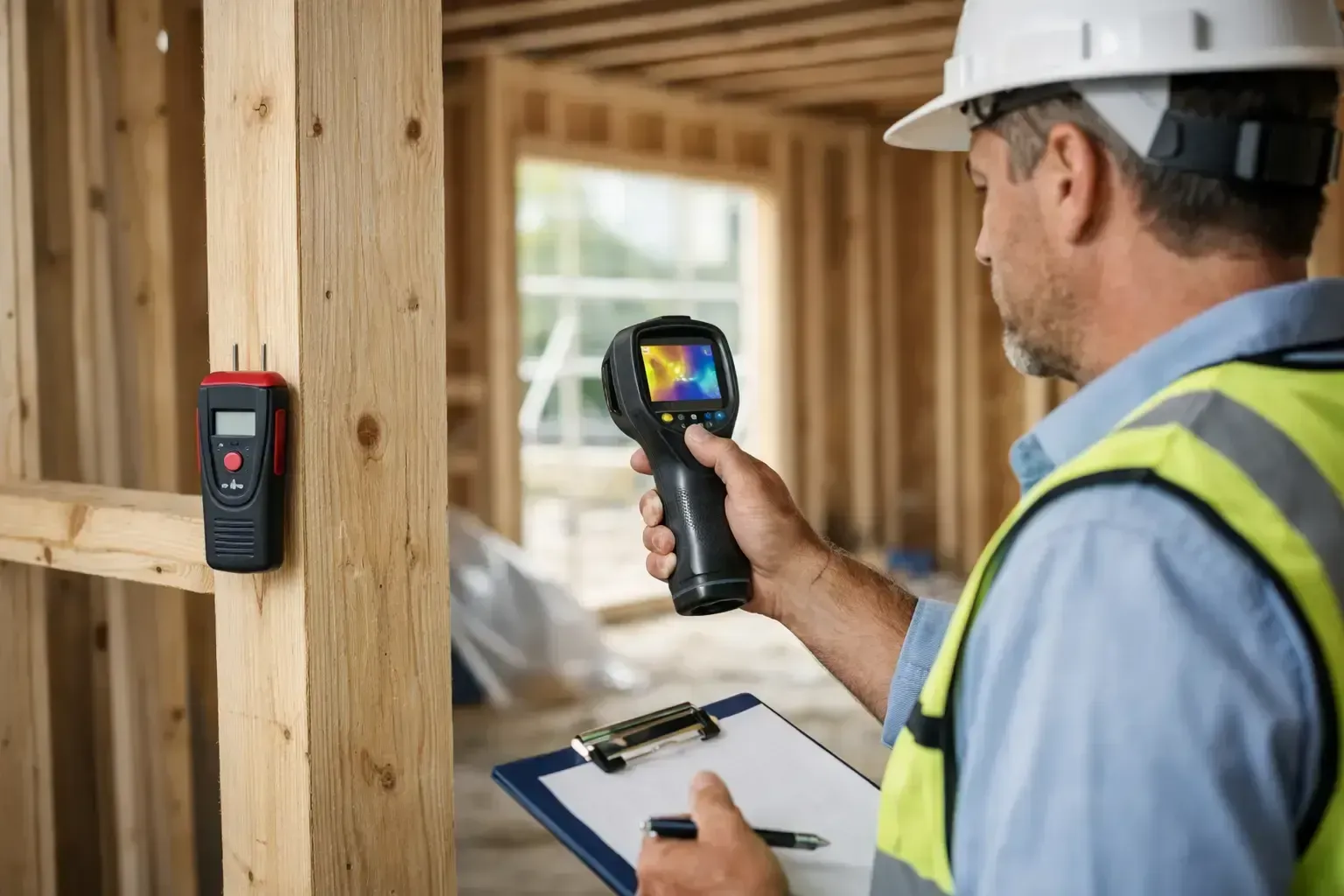
Fresh drywall, new flooring, and that clean jobsite look can hide a costly problem - trapped moisture. A new construction moisture inspection is one of the smartest checks you can schedule before closing, before insulation is sealed up, or before interior finishes are signed off. If framing, sheathing, concrete, subfloors, or wall cavities are holding excess moisture, the damage may not show until you are dealing with warped materials, microbial growth, or indoor air quality complaints.
For homeowners, builders, investors, and property managers, the issue is not just whether a building is new. The issue is whether it dried properly during construction and whether water entered the structure at any point along the way. In Florida and Kentucky, where humidity, rain events, and construction timelines often collide, that question matters more than most people realize.
Why New Construction Moisture Inspection Matters
New construction is not automatically dry construction. Materials are often delivered, stored, and installed in changing weather. Framing can get rained on. Slabs can retain moisture longer than expected. Roofing and window installation may lag behind the schedule. HVAC systems may not be running long enough to help stabilize interior conditions before finishes are installed.
That creates risk at exactly the wrong stage. Once drywall is up and flooring is down, moisture problems become harder to find and more expensive to correct. A hidden plumbing leak inside a wall, elevated moisture in base plates, or a damp subfloor beneath finished surfaces can go unnoticed until staining, odor, swelling, or mold appears.
A moisture inspection gives you documented answers. It helps confirm whether materials are within acceptable moisture ranges, whether suspicious areas need further investigation, and whether conditions support proper installation of finishes. It also creates a record. That record can matter if there is a dispute with a builder, subcontractor, seller, or insurer later.
What a New Construction Moisture Inspection Looks for
A proper inspection is not a quick walk-through with a flashlight. It is a targeted assessment of where moisture is most likely to collect, where it may be entering, and whether building materials have dried as they should.
In most cases, the inspection starts with a visual review. That includes looking for staining, material distortion, visible condensation, poorly sealed penetrations, incomplete flashing details, roof or window concerns, and signs that materials were exposed to water. The next step is moisture mapping with professional meters and thermal imaging when conditions support it.
Moisture meters help identify elevated readings in wood, drywall, concrete-adjacent materials, and finish surfaces. Thermal imaging can help locate temperature differences that may suggest moisture intrusion, missing insulation, or air leakage, though an infrared image alone is not proof of water. It needs to be interpreted correctly and verified with direct testing.
The most common areas of concern include window perimeters, exterior wall assemblies, roof transitions, bathrooms, kitchens, laundry rooms, mechanical rooms, plumbing penetrations, slab edges, and subfloors. In multi-unit and commercial settings, common problem areas may also include sprinkler lines, chase walls, and rooftop drainage transitions.
The Materials That Create the Biggest Problems
Some materials tolerate moisture better than others. Wood framing can dry if conditions improve quickly, but prolonged exposure can lead to swelling, staining, or mold growth. Drywall is less forgiving once it becomes wet, especially if it stays damp behind paint or trim. Engineered wood products and flooring materials can be even more sensitive.
Concrete adds another layer of complexity. A slab can appear dry at the surface while still releasing moisture vapor that affects adhesives, coatings, or flooring systems. That is why a surface-level assumption is not enough. The right testing method depends on the material and the stage of construction.
This is also where timing matters. An inspection done too early may identify wet materials that are still drying normally. An inspection done too late may miss the chance to correct conditions before finishes conceal the problem. There is no single perfect day for every project. The best timing depends on recent weather, construction progress, and whether there are already visible indicators of moisture stress.
When to Schedule the Inspection
The strongest window for a new construction moisture inspection is usually before final finishes are fully complete or before closing, while there is still a practical opportunity to correct issues. For some projects, an inspection during framing or pre-drywall makes sense, especially if the structure was exposed to heavy rain or there were known delays in drying.
A pre-closing inspection is still valuable, but it has limits. If all wall cavities are closed and all surfaces are finished, the inspection relies more heavily on non-invasive tools and visible indicators. That can still reveal important issues, but hidden damage may require more targeted follow-up if suspicious readings are found.
For builders and developers, periodic inspections during construction can reduce call-backs and warranty complaints. For buyers, an independent inspection before closing can provide peace of mind and help catch conditions that a standard home inspection may not evaluate in depth.
What Can Happen if Moisture is Missed
The short answer is delay, cost, and avoidable damage. The longer answer depends on where the moisture is and how long it remains. Wet framing can contribute to mold growth inside wall cavities. Damp subfloors can affect flooring performance. Moisture near windows or roof penetrations can damage insulation, trim, and sheathing. Hidden leaks can create indoor air quality issues long before visible damage becomes obvious.
In occupied homes and commercial properties, that often turns into complaints about musty odor, headaches, respiratory irritation, staining, soft drywall, or floor movement. At that point, the problem is no longer a simple construction correction. It becomes an environmental investigation, and possibly a restoration project.
For landlords, property managers, and commercial owners, there is another concern: documentation. If a tenant later reports mold or water damage, the lack of early moisture documentation can make the situation harder to defend or resolve. A professional inspection helps establish what was present, what was tested, and what needed action.
Not Every Elevated Reading Means Failure
This is where experience matters. A moisture reading has to be interpreted in context. Fresh concrete, recently installed materials, indoor humidity levels, local weather, and the type of meter being used all affect what the numbers mean.
A good inspector does not treat every elevated area like a crisis, and does not dismiss questionable readings either. The goal is accuracy. Sometimes the right answer is immediate correction. Sometimes it is continued drying and re-testing. Sometimes it is invasive verification because the pattern suggests a hidden leak rather than routine drying.
That balanced approach matters because overreacting can delay a project unnecessarily, while underreacting can leave damage behind walls and under finishes. The best inspections are careful, documented, and specific about what was found and what should happen next.
Choosing a Qualified Moisture Inspection Provider
If you are paying for a moisture inspection, you want more than a basic opinion. You want someone who understands building materials, water intrusion patterns, mold risk, and how to document findings clearly. That includes using calibrated tools, following sound inspection methods, and explaining results in plain language.
For many clients, especially buyers and commercial stakeholders, reporting is just as important as fieldwork. If elevated moisture is found, you need to know where, how extensive it appears to be, what testing was performed, and whether further action is recommended. Vague language does not help when deadlines, repair requests, or liability concerns are on the table.
That is why many property owners in Florida and Kentucky work with firms such as Hanes Environmental for moisture investigations tied to new construction, water intrusion, mold concerns, and defensible reporting. The value is not just finding a problem. It is knowing exactly what you are dealing with before it becomes harder to fix.
New Construction Moisture Inspection and Long-term Building Health
A dry building starts stronger. That affects durability, indoor air quality, finish performance, and maintenance costs over time. It also protects the people who will live or work in the property. New construction should feel like a fresh start, not the beginning of a hidden moisture problem.
If something seems off during a build or before closing, trust that instinct and get it checked. Moisture problems are easiest to solve when they are found early, documented clearly, and addressed before the building is fully occupied.
Recent Posts